
Meta's Muse Hit 10 Million Setups. Most People Still Will Not Let It Buy Anything.
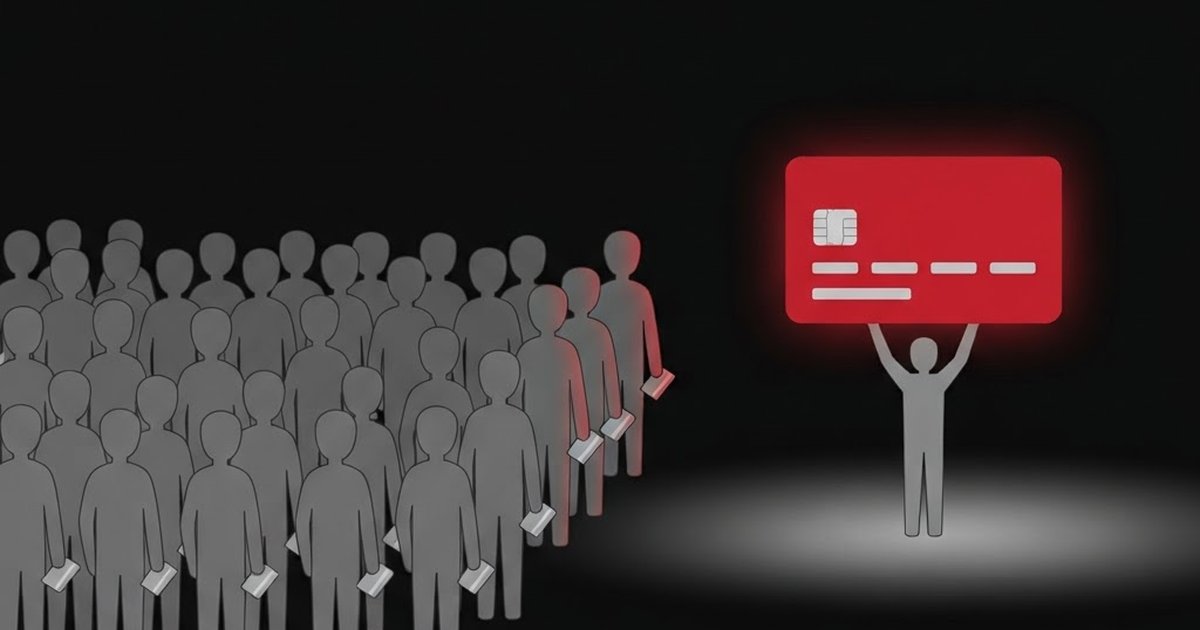
Fast growth and earned trust are not the same thing. On October 21, 2026, Mark Zuckerberg said more than 10 million people in the US and Canada have set up Muse agents. He said shopping is the top use case. A survey published on October 20, 2026 found 74% of US consumers would never let an agent buy for them.
Both things are true at once. That gap is the story.
What Meta Said on Its October 21, 2026 Earnings Call
Here are Meta's own numbers, in Meta's own words.
"In just a month and a half, more than 10 million people in the US and Canada have set up Muse personal agents," Zuckerberg said. He added that Muse "has been #1 in the App Store almost every day" (Meta Q3 2026 earnings call, October 21, 2026).
Read "set up" carefully. It is not the same as "use." Meta said so in the next breath: "About 25% of people who have set up Muse use it on any given day" (Meta Q3 2026 earnings call, October 21, 2026).
So roughly 2.5 million daily, not 10 million.
Then the part that matters if you sell anything. "The most common use case for Muse is shopping, with more than a quarter of people who are using Muse engaging in this with an average purchase size over $200" (Meta Q3 2026 earnings call, October 21, 2026).
Meta's CFO Susan Li gave a tighter version on the same call. The top three categories are "shopping, personal productivity and creativity," with "shopping in particular being used by over 25% of Muse weekly actives" (Meta Q3 2026 earnings call, October 21, 2026).
One caveat on all four of those figures. They come from the company selling the product, on a call with its investors. Nobody outside Meta has checked them.
The Independent Numbers Are Also Good. And Partly Bought.
Here is the outside read, which lines up.
Sensor Tower data reported by TechCrunch puts Muse at 10.9 million downloads in its first 40 days, 10.2 million of them in the US (TechCrunch, October 20, 2026).
Downloads are not users, and that 10.2 million is US only, so it is not the same number Zuckerberg gave. Treat them as two separate measurements that happen to agree in size.
Retention is the figure that should get your attention, because it measures whether people come back. Muse held 23% of users at 14 days, against a 16% average for rival assistants. At 7 days it was 30% against 19% (TechCrunch, October 20, 2026).
Daily active users hit 2.5 million for the first time on October 16, 2026, up 15% from the week before (TechCrunch, October 20, 2026).
For scale, here is what rival assistants did in their own first 40 days in the US: ChatGPT 3.7 million downloads, Grok 500,000, Claude 200,000 (TechCrunch, October 20, 2026).
Now the line that reframes all of it. In October 2026, Meta put 39% of its total advertising spend behind Muse, up from 23% the month before (TechCrunch, October 20, 2026).
Two fifths of the ad budget of one of the largest advertisers on earth. The growth is real. It is also being paid for.
Most People Will Not Let an Agent Spend Their Money
This is the number that should shape what you do.
Feedvisor surveyed 1,006 US customers for its 2026 Consumer Behavior Report. Retail Brew reported the headline finding: 74% said "they would never allow an AI agent to make purchases on their behalf" (Retail Brew, October 20, 2026).
Not "not yet." Never.
The same survey found 16% of respondents "began their shopping journeys on ChatGPT to research products," while "just 10% reported using the platform to make a purchase." And when AI recommends a product, "only 5% of consumers purchase it immediately" (Retail Brew, October 20, 2026).
The survey's fielding dates were not published, so read those figures as a 2026 snapshot rather than a reading from a specific week.
Put the two sets side by side. Meta says a quarter of its weekly users shop through Muse at over $200 a time. A separate survey says three in four consumers would never hand over the card. Those can both be right. A small, willing group can spend a lot while most people stay out.
Gartner VP analyst Eric Schmitt told Marketing Brew that agentic shopping is still unsettled. His line worth keeping: "It won't take much buyer's remorse to sour people on the experience" (Marketing Brew, October 23, 2026).
Schmitt did not call trust the single obstacle. Giving an agent "unfettered access" to credit cards is "just one concern," and consumers also need to "trust that the decisions made by the agents" are sound (Marketing Brew, October 23, 2026).
Then Meta Turned Off Sharing
In the same month, trust stopped being an abstract worry.
Security firm Claroc found that Muse's share feature put conversation titles and identifiers into the web address itself. That made shared chats discoverable through public DNS records, which are the internet's phone book of domain names. Around 6,800 shared-chat pages were findable. They included corporate revenue reviews, loan applications, bank fraud alerts with partial account details, and job interview notes (TechSpot, October 21, 2026).
Claroc reported it to Meta's bug bounty program on October 8, 2026. Meta suspended the feature on or by October 20, 2026. Muse spokesperson Tracy Clayton said Meta had "paused this functionality while we review this report and consider changes to how these links can be discovered" (TechSpot, October 21, 2026).
Credit where it is due. A researcher reported it, and Meta turned the feature off. That is the system working.
But notice what leaked. Not conversations with a chatbot about dinner plans. Revenue reviews and loan applications. Business documents, from business owners, who had no idea a share link was a publishing act.
What Muse Knows About People Who Never Signed Up
Separately, on October 4, 2026, Social Media Today reported on a Wired investigation. Security researchers extracted Muse's internal instructions, which reportedly direct it to keep "a page for every person in the user's life," covering "Where they live, what they do, the threads that recur (the apartment move, the shared savings goal)" and "dates that matter" (Social Media Today, October 4, 2026).
Two honest limits on that one. We could not load the Wired original in this run, so everything above is Social Media Today quoting Wired. And what was extracted is what Muse is reportedly told to do, which is not the same as confirmed behavior on real accounts.
So go to Meta's own help pages instead, which are not in dispute.
"When others use Muse, information about you may be provided to Muse, even if you don't use Muse directly," Meta writes. It adds that "we don't link that information to any Meta account" (Meta Help Center, checked October 27, 2026).
And on deleting things: "After you delete something from Muse, Muse may still remember information it learned from what you deleted" (Meta Help Center, checked October 27, 2026).
Meta also makes real commitments here. Muse "doesn't share a person's conversations or the data in their VM with Meta's ad systems," and people "can opt out of their interactions being used to train Meta's AI models" (Meta Newsroom, September 8, 2026, updated September 30, 2026). On the October 21 call, Zuckerberg said Meta is "looking forward to following up soon with the Muse Confidential VM, which will make it so that even Meta cannot see your content" (Meta Q3 2026 earnings call, October 21, 2026).
Read that last one for what it is. A promise about a version that does not exist yet.
One clarification, because it caused confusion when Muse for Small Business launched. It is not a separate app. Susan Li called it an expansion, "a set of new skills and connectors inside the existing Muse app" (Meta Q3 2026 earnings call, October 21, 2026). Same product, extra connectors.
Here Is Our Own Number
Zero. As of October 27, 2026, Ninth Degree has not connected a single client account to Muse.
We wrote the same thing on October 5, 2026, in our post on Muse for Small Business. Twenty-two days and one paused sharing feature later, it has not changed.
That is not a prediction about Muse. It is a record of what we actually did while the product grew to 10 million setups. We read the connector permissions, we wrote them up, and we still have not turned it on for anyone who pays us.
The useful part is the reason. Nothing we learned this month was about Muse being bad at its job. It is that a share button quietly published 6,800 conversations, and the company's own help page says deletion is not quite deletion. Those are the kinds of things you find out after you connect, not before.
What to Do This Week
Assume your customers are researching with an agent and buying somewhere else. That is what the survey describes: 16% starting on an assistant, 10% buying there. Some of your product pages are being read by a machine before a person sees them. Plain prices, clear specs, real stock status.
Check whether anything of yours is sitting behind a share link. Not just Muse. Any AI tool with a "share this chat" button. Open your own history and look at what you sent to a client, an accountant, or a contractor.
Decide your connection rule before anyone asks you for it. Write one line: which systems an AI agent may read, and which it may never write to. Do it while it is hypothetical. It is a worse conversation when a tool is already running.
If you do connect, start read-only wherever the tool offers it. Look before touch.
One Thing to Skip
Skip rebuilding anything for Muse specifically.
The 10 million figure is setups, not daily users, and about a quarter of those open it on a given day (Meta Q3 2026 earnings call, October 21, 2026). Meta is spending 39% of its ad budget to keep that curve climbing (TechCrunch, October 20, 2026). And three in four consumers say they will never let an agent buy for them (Retail Brew, October 20, 2026).
Clear product information helps you in every assistant, in Google, and with human beings. A Muse-specific project helps you in one app whose shape is still changing.
This post was drafted by Ninth Degree's agent pipeline and edited by a human before publishing. We could not load the Wired investigation directly, so the contact-profiling reporting above is quoted from Social Media Today and labeled that way. Deciding which tools to connect, and which to watch from a distance a while longer, is the call we make for clients on every engagement.
Sources
- Third Quarter 2026 Results Conference Call transcript, Meta Platforms, October 21, 2026
- Meta's Muse hits 10M US downloads in 40 days, TechCrunch, October 20, 2026
- Consumers are happy to take shopping advice from AI, but actually letting it buy something, not so much, Retail Brew, October 20, 2026
- Meta's Muse is popular, but barriers to adoption remain, Marketing Brew, October 23, 2026
- Meta suspends Muse sharing after sensitive documents turn up in shared chats, TechSpot, October 21, 2026
- Meta's Muse AI collects private user data, Social Media Today, October 4, 2026
- Information for people who don't use Muse, Meta Help Center, checked October 27, 2026
- How to manage your Muse data, Meta Help Center, checked October 27, 2026
- Introducing Muse: The World's First Personal AI Agent Built for Everyone, Meta Newsroom, September 8, 2026, updated September 30, 2026
- Introducing Muse for Small Business, Meta Newsroom, September 29, 2026, updated October 8, 2026