
Fast AI Work Feels Like It Should Cost Less. Here Is What You Are Actually Paying For.
If an agency uses AI and hands you the work in hours instead of weeks, it can feel like you should pay less. Usually you should not. That gut reaction has a name in the research. Pay for the result and the judgment behind it, and count the speed as a benefit you keep.
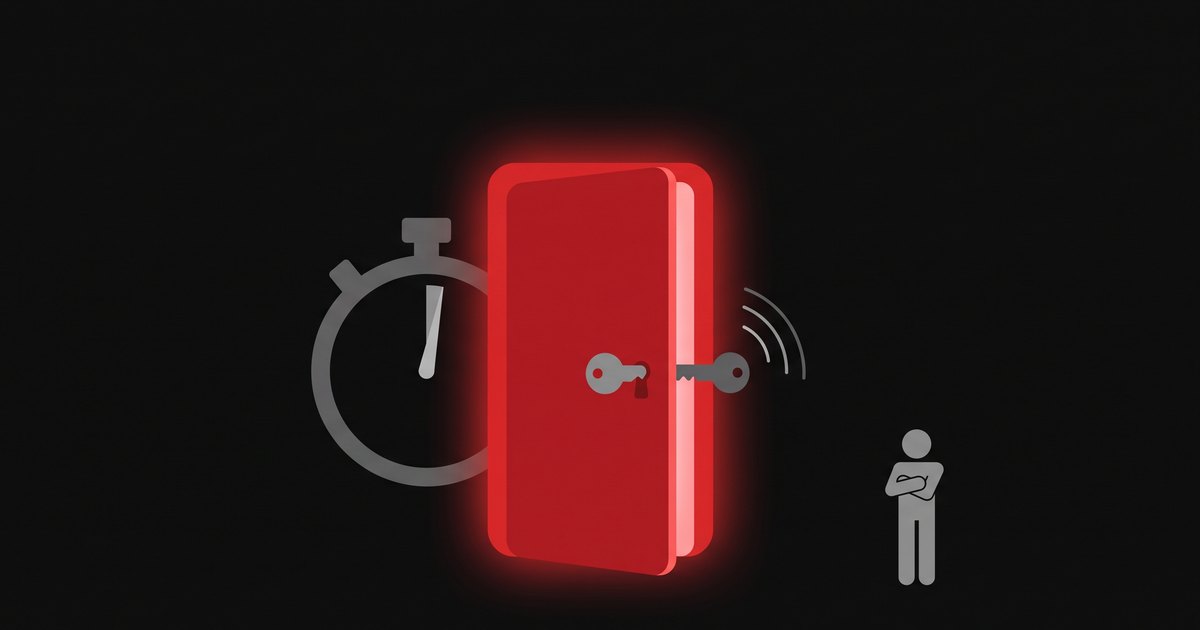
A Locksmith Who Got Faster and Got Paid Less
Behavioral economist Dan Ariely tells a story about a locksmith. As an apprentice, he took a long time to pick a lock and often broke it, and customers tipped him well. Once he could open a lock in a moment, the tips stopped and customers complained he was overcharging (Dan Ariely, December 15, 2010).
Read that again. The slow, clumsy version got the tip. Ariely's takeaway is that "consumers don't value goods and services solely by their utility" (Dan Ariely, December 15, 2010). Utility is economist talk for how useful something is.
Two studies found the same pattern. In a paper published in January 2004, Justin Kruger and colleagues found people rated the same poem, painting, or piece of work as better and worth more when they were told it took longer to make (Journal of Experimental Social Psychology, January 2004). Only the story about the hours changed.
In a paper published in September 2011, Harvard Business School researchers Ryan Buell and Michael Norton reported five experiments on travel and dating websites. People preferred a site that made them wait while it showed its effort over one that returned the same result instantly (Management Science, September 2011).
Why Fast Work Feels Cheap, Especially With AI
In plain English: the labor illusion, Buell and Norton's name for their finding, means we value work more when we can watch it happen (Management Science, September 2011). The effort heuristic is the mental shortcut underneath it: if it took longer, it must be better (Journal of Experimental Social Psychology, January 2004).
AI adds its own twist. In a preprint, meaning a paper that had not been peer reviewed as of March 4, 2026, Northeastern University researchers reported 13 studies with 4,956 participants and found that "participants consistently lowered compensation for workers who used AI compared to those who did not" (arXiv, revised March 4, 2026). In one study, a designer described as using AI was awarded an average bonus of $33, against $47 for the same design with no mention of AI (arXiv, revised March 4, 2026).
Clients act on that feeling. Going Concern, citing Bloomberg, reported on June 30, 2025 that PwC cut prices on some services after clients pointed out the firm was using AI to finish work faster. PwC's Chief AI Officer, Dan Priest, told Bloomberg that clients said, "We want our fair share of those efficiencies," and that the cuts had "plateaued" because AI improves quality too (Going Concern, June 30, 2025).
Smaller shops hear it as a question. Nils Borgböhmer, who runs a design agency, wrote on September 7, 2026 that clients increasingly ask him "aren't you a lot faster now, with all this AI?", which he says really means "could this be cheaper?" (Dinghy Studio, September 7, 2026).
What You Are Actually Paying For When an Agency Uses AI
Here is a real number from this blog. The agent draft behind our post on an AI blogging survey took under four minutes on September 16, 2026, and the human editing took about 30 minutes, on purpose (Ninth Degree, September 21, 2026).
The four minutes were the cheap part. The half hour was a person deciding what was true and what was worth your time. You are not paying for the minutes the machine ran. You are paying for the calls a person made around them.
Some of those calls come first, like picking the problem worth solving and the angle that fits your business. The Northeastern researchers found that when workers kept creative control over the core of the task, most of the pay penalty went away (arXiv, revised March 4, 2026).
Some of the value is the setup itself. A four-minute draft only happens because somebody built the system that produces it and keeps checking what it gets wrong. I wrote about why I built an AI system instead of hiring a full team in an earlier post.
For what it is worth, as of September 2026 I have not had a client push back on price because of AI or because the work came back fast. Ninth Degree is not the cheapest option. There are plenty of do-it-yourself website builders, and you can always have a teenager build it. With those, you usually get what you pay for.
What you get with me took years to build: consumer goods, websites, marketing, advertising, and hundreds of books, plus an eye for the spot where a page trips someone up or could delight them. Put that time together with AI and yes, you get speed. The bigger change is that it condenses the part that matters, getting the reaction from the end user that the thing was built to get. Does the site speak to the customer we want the moment it loads? Does it act as the guide, not the hero? AI can do some of that. Without the right prompt and the thinking in front of it, it falls short.
And the speed is yours to keep. A campaign that ships in two days instead of three weeks starts working for you that much sooner, and when it needs a change, the change lands in days too. That is a benefit you get, not a reason to pay less.
How to Tell Good Fast From Cheap Fast
Some fast work really is cheap. Four checks will tell you which kind you got.
Ask what a person checked and changed. A good agency can answer in a couple of sentences. If nobody can say what they verified or rewrote, nobody looked closely.
Ask who made the core calls. Who chose the message and the direction? If a person owned those decisions, you are buying judgment. If the honest answer is "the tool," you are buying a first draft.
Ask to see the work behind it. In a March-April 2019 follow-up, Buell argued that showing customers the work behind a service raises how much they value it, and hiding the work lowers it (Harvard Business Review, March-April 2019). He calls this operational transparency, which just means letting customers see the work. If an agency goes vague when you ask, that tells you something.
Judge the result against the goal. Did the work do the job you hired it for? A page that brings in leads after two days is worth more than one that flops after six weeks. The calendar is the wrong ruler.
If You Run an Agency: How to Price Fast AI Work
When UK agency advisor Mat Bennett asked 73 agencies how AI had changed their prices, the most common answer, from over 40%, was "Same price, but do more for it" (Mat Bennett, September 3, 2026). Just 21% had kept the saving, by charging more for the same work or restructuring what they sell, and 1% had cut prices (Mat Bennett, September 3, 2026). One respondent put it this way: "What we used to charge 10 days for takes 30 minutes, but we still end up doing 10 days of work for clients, just on other things" (Mat Bennett, September 3, 2026).
So price what you deliver, and keep the hour count to yourself. The client is buying the landing page or the month of posts, so that is what gets the price.
Then show the work at handoff. Send a short note with every delivery saying what a person checked and what they changed. It answers the buyer's first question before anyone asks it.
Then put the speed on the proposal as a benefit. A two-day turnaround is something the client gets, so write it down next to the scope.
One move to skip is artificial latency: holding finished work back so it looks like it took longer. Ninth Degree does not do it. This blog publishes how the pipeline works and how long it takes, so faking a slow week would be a lie told in public.
So, Should You Pay Less?
Usually, no. Pay for what the work does for your business and for the person behind it. If an agency can show you what it checked and who made the calls, enjoy the fast turnaround. If it cannot, have that conversation before you ask for a discount.
Since this blog practices what it preaches: this topic came out of my own reading and research on how AI is changing what agencies charge, and I suggested it. Ninth Degree's agent pipeline drafted the post from there, and I edited it before publishing. That is the human work, showing. Building content systems like this one for clients is a service we sell.
Sources
- Locksmiths, Dan Ariely, December 15, 2010
- The Effort Heuristic, Journal of Experimental Social Psychology, January 2004
- The Labor Illusion: How Operational Transparency Increases Perceived Value, Management Science, September 2011
- The AI Penalty: People Reduce Compensation for Workers Who Use AI, arXiv, revised March 4, 2026
- Big 4 Firm Discovers That Bragging About AI Efficiencies Leads Clients to Expect a Discount, Going Concern, June 30, 2025
- Aren't You Faster Now? What AI Changes for a Design Agency, Dinghy Studio, September 7, 2026
- Almost Everyone Uses AI to Write Blog Posts in 2026. Results Just Hit a Twelve-Year Low., Ninth Degree, September 21, 2026
- Operational Transparency, Harvard Business Review, March-April 2019
- AI made your agency faster. Who kept the saving?, Mat Bennett, September 3, 2026