
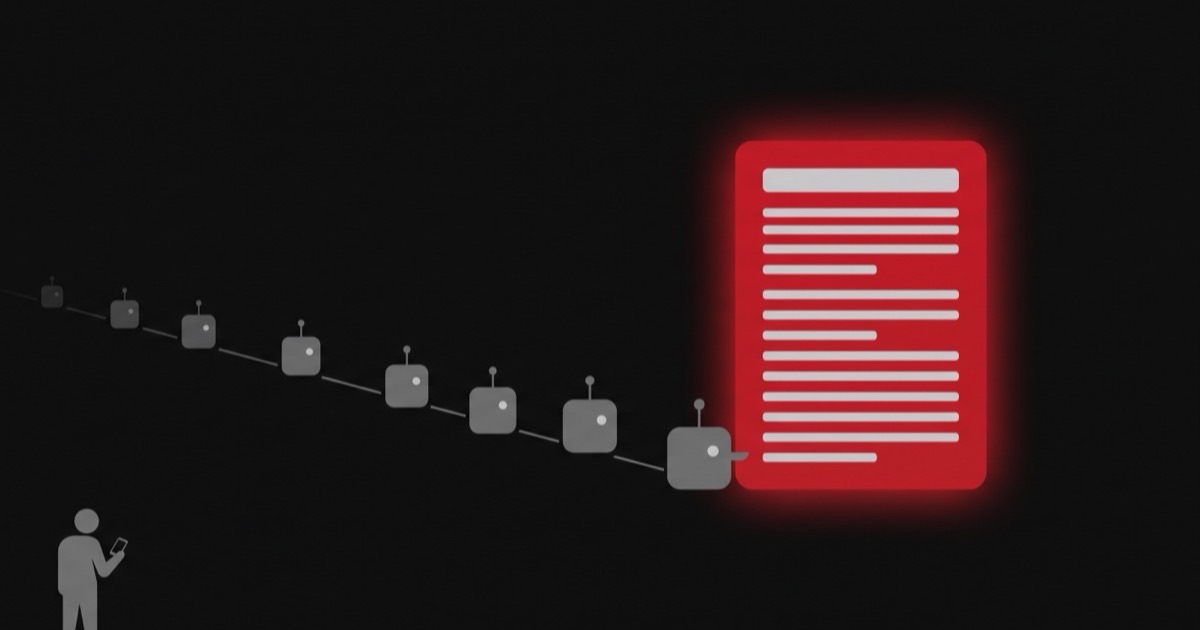
Big Brands Are Now Advertising to Robots. Here Is the Part That Matters for You.
Time magazine keeps a list of about 70 AI agents it lets crawl its site, and sends them to a special page of verified facts before they see the real article (Marketing Brew, September 8, 2026). That sounds like something only a magazine would do. Half of it is. The other half is free, and you could do it this afternoon.
Wait, People Are Buying Ads for Software Now?
Yes, and it is less strange than it sounds.
Quick translation. An AI agent is software that browses the web on a person's behalf. Someone asks ChatGPT to find a good roofer, or tells a shopping assistant to compare three couches, and the agent goes out and reads websites instead of the person doing it. The customer never sees your homepage. The agent does.
So Time magazine started treating agents as an audience. It works with an ad platform called Mobian to run "Agent Ads," an ad format built to be read by software rather than looked at by a person. It keeps an allow list of roughly 70 agents that are permitted to crawl the site. And it routes those agents to stripped-down, text-only pages, the kind a machine reads easily, that hold the brand's verified facts and disclosure info before they reach the actual webpage (Marketing Brew, September 8, 2026).
Time COO Mark Howard put the goal simply: "It's about getting those brand facts into that knowledge layer" (Marketing Brew, September 8, 2026).
Wayfair is doing the retail version. It keeps adding product details to help agents make better recommendations, and it signed on to something called the Universal Commerce Protocol with Google, which is an attempt to make online shopping easier for agents to do (Marketing Brew, September 8, 2026).
The Numbers Behind It Are Not Small
This is not two companies being weird.
HUMAN Security, a cybersecurity firm, looked at more than a quadrillion digital interactions and found that in 2025, automated traffic on the internet grew 23.51% while human traffic grew 3.10% (HUMAN Security, March 26, 2026). Automation is not eight times bigger than people. It is growing about eight times faster.
The sharpest line in that report: traffic from AI agents and agentic browsers grew 7,851% year over year (HUMAN Security, March 26, 2026). That is the number that explains why Time now sees a growing number of days with more bot traffic than human traffic (Marketing Brew, September 8, 2026).
Now the Honest Part
Before you rearrange your website, read this paragraph.
More than 95% of AI-driven traffic in 2025 landed in exactly three industries: retail and e-commerce, streaming and media, and travel and hospitality (HUMAN Security, March 26, 2026). Time is media. Wayfair is retail. They are not early adopters so much as the two industries this hit first.
If you run a dental practice, a law firm, or an HVAC company, agents are not currently flooding your site. This is a thing arriving at your door, not a thing already in your living room.
There is one early sign it is worth being ready for. Ally Bank found that customers who arrived from AI had higher conversion rates and showed up further along in the buying process (Marketing Brew, September 8, 2026). That is one company's data on its own customers, so hold it loosely. But it matches the logic: an agent that recommends you has already done the comparing.
What to Actually Do This Week
Check that agents can even get in. This is the whole ballgame and most sites fail it quietly. Your site needs to allow AI crawlers, have a working sitemap, and present content as real text a machine can read. Cloudflare's Agent Readiness tool checks exactly this: crawl permissions, sitemaps, readable content structure (Cloudflare, August 6, 2026). If an agent cannot read your page, nothing else on this list matters.
Put your facts in plain text, in one place. Services, service area, hours, pricing if you publish it, who you serve, what you do not do. This is the small-business version of Time's page of brand-verified facts. You do not need a separate machine-only page and an allow list. You need one honest page a machine can quote without guessing.
Say the specific thing. Agents recommend based on what they can match. "Full-service contractor serving the greater metro area" matches nothing. "Kitchen and bath remodels in Boulder and Longmont, typical project $40k to $90k" matches a real question someone is asking.
Ask an assistant about your own category. Type the question your customer would type into ChatGPT or Gemini. See who gets named. That is your free competitive research, and it takes four minutes. For Google's own AI answers you can skip the guessing: a free report shows whether your site appears in Google AI results (added October 7, 2026).
Look at your logs for bots, not just people. Your analytics are built to count humans. If your host or CDN shows crawler traffic, glance at whether AI crawlers are showing up at all. Zero is a finding.
One Thing to Skip
Skip Agent Ads. You cannot meaningfully buy them yet, they are being run by a magazine with an ad-tech partner and an allow list, and nothing about that maps to a business your size. If you are reading this on your lunch break at a giant travel company, hi, you are the exception, and you already have a whole department for this. Same for the paid AI-visibility dashboards, Adobe's Brand Visibility and Cloudflare's AEO Visibility Dashboard, both launched this year (Marketing Brew, September 8, 2026). They are real tools. They are for companies with someone whose job is watching that number all day. Get readable first. Measure later.
And skip anyone who sells you "agent optimization" as a package before your site passes the basic readability check. That check is free.
Since this blog practices what it preaches: this post was drafted by Ninth Degree's agent pipeline and edited by a human before publishing, and building websites that AI agents and assistants can actually read, cite, and recommend is a service we sell.
Sources
- Some companies are using ads to influence AI agents, Marketing Brew, September 8, 2026
- 2026 State of AI Traffic and Cyberthreat Benchmark Report, HUMAN Security, March 26, 2026
- Cloudflare Adds AEO Visibility Dashboard to Its AEO Suite, Cloudflare, August 6, 2026